What's new

Obscure

Student of Trinity

Silver Meritorious Patron
Uh some links or actual proof to this "peer reviewed" work you speak of, it being peer-reviewed and all Im sure there are plenty of references to the important work done by this madcap group of ex-scientologists who "rewrote" stuff they found useful, stripping it of all Scio tech babble, and are now being embraced by social workers and psychologists' professional organizations. Hell it must be all over university websites since that's who is in charge of peer reviewed material and journals - people with graduate degrees generally being the "peers" in question when it comes to psychologists or counselors with a MSW.

'Peer review' just means that the reviewing of research results is done by people with comparable expertise to the authors of the research. For scientific papers this usually means people who have themselves published a paper on a related topic. Peer review is very far from being a perfect system, and by no means does it guarantee that claims which pass review are all correct. Some supposed peers are total idiots, in fact. Don't get me started on this.

But peer review is probably better than no review at all, or review by arbitrarily selected panelists who wouldn't know a good scientific paper if it hit them in the face. Also, a big part of peer review concerns the importance and relevance of results presented for publication, as opposed to mere validity. Other people working on the same topic are probably the best judges of whether your results are significant, as well as whether they're true.

So I'd say that if a bunch of indy Scientologists have all agreed that something is good, then that is genuine peer review, for whatever that's worth. In this case, I don't happen to feel that it's worth very much at all; but then I'm not a Scientologist peer.

Scientific assessment of Scientology claims would certainly be an entirely different thing from peer review by other Scientologists. Alas, that is unlikely to happen. Scientific investigation is really hard work. Scientists don't have any magic wand that lets them dowse for truth. They're just smart people who work very carefully. Being a scientist doesn't mean that you can check out in Scientology in a couple of hours; it means that you could check it out thoroughly in a few years. But life is short. There are a lot of other ideas that better deserve those few years of study than Scientology does. In other words, Scientology hasn't yet amassed enough plausibility evidence to make the cut for deserving proper scientific attention.
 

I told you I was trouble

Suspended animation
:) Dear ITYIWT,

There's not much virtue with "fitting right in."

There are likely going to be a lot of new people arriving, having left an environment where they are expected to "fit right in."

The existence of many points of view, spirited debate, free flow of information - including information that may make some new arrivals uncomfortable at times - is healthy.

However, IMO, encouraging others to "fit right in" is not the way to go.

And to the several recent new arrivals, Artful, Marcus Sawyer, Galactic Patrol, and others, I second ITYIWT's message of :welcome: .

And feel free not to fit right in.


Lol, point taken (with slight reluctance!).

:whistling:
 

Mick Wenlock

Admin Emeritus (retired)
I rarely go to events and have been that way for at least a decade. The major reason is that I really don't like the Shermanisation of the English language or Jeff Pomerantz in exhilaration.

I missed the GAT II events (3 in two days!) and apparently they are not available any more.

Those who are relatively new or young tend to believe it all. Those who have been around for a while are aware of problems but aren't spotting the source of them. It isn't as easy as "the whole thing is a con". If that were the case it would have long been over. The problem is that the tech works and once you know the tech works from personal experience you then have a big reason to want the DM b/s to be true. It's also hard to explain without a good long hard look how it is that the subject can hold so much promise and yet the management can be so corrupt. It doesn't add up and is therefore easy to reject.

I'll tell more of my story in coming posts.

looking forward to your further posts.

When you do post more I would encourage you to elaborate on a few points.

1) you make the argument that if it were a con then it would have long been over. I presume from this line of reasoning that you think that Mormonism is even more correct than Scientology? After all it has been around a lot longer. I would point out that Scientology is, in fact. failing - as evidenced by you own statements.

2) you advance the argument that the "problem is that the tech works" -. I think that statement is 180 degrees wrong - the problem is that it has never worked. you will see lots of argument on here about this very point and I will be interested in how you arrived at that conclusion. My statement is based on the following facts - a) there has never been a clear in the history of scientology or dianetics. b) there has never been an OT c) Hubbards "policies" could not even produce an orderly and clearcut succession of management d) apparently sps are far stronger, able and effective than either the organization or the "OTs" - according to the Church.

Why is it, you think, that Scientologists are so unwilling to stand up to bullying and unreasonable behavior? Why are they so lacking in courage that they dare not stand up against the people they think are destroying their church?

I am an exSO member ex CO AOSH EU, ex D/CO EU - Guillaume is (or was) my friend, I have worked with Miscavige and Yager, - I was a believer.
 

Mick Wenlock

Admin Emeritus (retired)
'Peer review' just means that the reviewing of research results is done by people with comparable expertise to the authors of the research. For scientific papers this usually means people who have themselves published a paper on a related topic. Peer review is very far from being a perfect system, and by no means does it guarantee that claims which pass review are all correct. Some supposed peers are total idiots, in fact. Don't get me started on this.

But peer review is probably better than no review at all, or review by arbitrarily selected panelists who wouldn't know a good scientific paper if it hit them in the face. Also, a big part of peer review concerns the importance and relevance of results presented for publication, as opposed to mere validity. Other people working on the same topic are probably the best judges of whether your results are significant, as well as whether they're true.

So I'd say that if a bunch of indy Scientologists have all agreed that something is good, then that is genuine peer review, for whatever that's worth. In this case, I don't happen to feel that it's worth very much at all; but then I'm not a Scientologist peer.

Scientific assessment of Scientology claims would certainly be an entirely different thing from peer review by other Scientologists. Alas, that is unlikely to happen. Scientific investigation is really hard work. Scientists don't have any magic wand that lets them dowse for truth. They're just smart people who work very carefully. Being a scientist doesn't mean that you can check out in Scientology in a couple of hours; it means that you could check it out thoroughly in a few years. But life is short. There are a lot of other ideas that better deserve those few years of study than Scientology does. In other words, Scientology hasn't yet amassed enough plausibility evidence to make the cut for deserving proper scientific attention.

Methinks you may not understand what "peer review" means. Actually peer review is a part of the scientific method. One part of the peer review is not just a review of the conclusions but of what methodology and statistical analysis was used to arrive at those conclusions. So the reviewers would have to ALSO include 'peers' who understand research analysis and statistical analysis.

Its a little bit more than just having a bunch of people who agree with you read what you wrote and approve it. That would be Hubbardian Peer Review.

Absent the rest of the scientific method it, peer review by itself (and as you illustrate) means not much at all. After all a paper produced by fairy believers, and reviewed by fairy believers would indeed be "peer reviewed" by your 'definition'.
 

Student of Trinity

Silver Meritorious Patron
Methinks you may not understand what "peer review" means. Actually peer review is a part of the scientific method. One part of the peer review is not just a review of the conclusions but of what methodology and statistical analysis was used to arrive at those conclusions. So the reviewers would have to ALSO include 'peers' who understand research analysis and statistical analysis.

Its a little bit more than just having a bunch of people who agree with you read what you wrote and approve it. That would be Hubbardian Peer Review.

Absent the rest of the scientific method it, peer review by itself (and as you illustrate) means not much at all. After all a paper produced by fairy believers, and reviewed by fairy believers would indeed be "peer reviewed" by your 'definition'.

With regard to scientific peer review, I am the one who knocks. I'm a physics professor. I submit papers to journals, and journals send me manuscripts to review. The system is what I described.
 

BunnySkull

Silver Meritorious Patron
'Peer review' just means that the reviewing of research results is done by people with comparable expertise to the authors of the research. For scientific papers this usually means people who have themselves published a paper on a related topic. Peer review is very far from being a perfect system, and by no means does it guarantee that claims which pass review are all correct. Some supposed peers are total idiots, in fact. Don't get me started on this.

But peer review is probably better than no review at all, or review by arbitrarily selected panelists who wouldn't know a good scientific paper if it hit them in the face. Also, a big part of peer review concerns the importance and relevance of results presented for publication, as opposed to mere validity. Other people working on the same topic are probably the best judges of whether your results are significant, as well as whether they're true.

So I'd say that if a bunch of indy Scientologists have all agreed that something is good, then that is genuine peer review, for whatever that's worth. In this case, I don't happen to feel that it's worth very much at all; but then I'm not a Scientologist peer.

Scientific assessment of Scientology claims would certainly be an entirely different thing from peer review by other Scientologists. Alas, that is unlikely to happen. Scientific investigation is really hard work. Scientists don't have any magic wand that lets them dowse for truth. They're just smart people who work very carefully. Being a scientist doesn't mean that you can check out in Scientology in a couple of hours; it means that you could check it out thoroughly in a few years. But life is short. There are a lot of other ideas that better deserve those few years of study than Scientology does. In other words, Scientology hasn't yet amassed enough plausibility evidence to make the cut for deserving proper scientific attention.

He claimed the peer review resulted in adoption by the American Psychological Assoc. and Nat. Assoc. of Social workers - in that specific instance, in that field, peer review would be done by people with masters or Ph. d in those field, usually those in the research/ academic arms of the social sciences. (I suppose it could also be done by someone with a Bach. In those fields but I've never seen it.). Those groups would not accept peer review by "indie scios" to make recommendations.

Peer review takes on different meanings in different academic fields. Physics, being a hard science, has never had the image or academic image problem that the social sciences have been plagued with. As a result, in psychology esp, peer review does have some precise definitions or criteria - different from what peer review is in the mathematics or physics world. (I've had to deal with it personally - no fun and quite obtuse. The push to publish is as bad in psychology as in any other academic research field.)

This goes into some detail specific to psychology:
http://psychology.wikia.com/wiki/Peer_review
 

Mick Wenlock

Admin Emeritus (retired)
With regard to scientific peer review, I am the one who knocks. I'm a physics professor. I submit papers to journals, and journals send me manuscripts to review. The system is what I described.

Oh really?

So when you get papers for review - you do not review the methodology or the analysis?

Hmm.

And you think "I'm a physics professor" somehow validates something which is pure bs? Really?

it doesn't.

How about you cite a peer reviewed study (and feel free to cite something you reviewed and which was published) where both the methodology and statistical analysis were not part of the review.

I would be interested indeed in the scientific journal that published peer review based on the simple criterion that one has to be a member of the tribe .


I quote from Science

http://www.sciencemag.org/site/feature/contribinfo/RAinstr13.pdf

Headquarters
1200 New York Avenue, NW Washington, DC 20005 USA ● Telephone: (+1) 202-326-6550 ● Fax (+1) 202-408-1256
Europe Office
Bateman House, 82-88 Hills road, Cambridge CB2 1LQ, UK ● Telephone: (+44) 1223-326500 ● Fax: (+44) 1223 326501
Published by the American Association for the Advancement of Science
Instructions for Reviewers of Research Articles
CRITERIA FOR JUDGMENT
Research Articles should report a major breakthrough in a particular field. They should be in the top 20% of the papers that Science publishes and be of strong interdisciplinary interest or unusual interest to the specialist.
Overall Recommendation: On the basis of the mission statement above, recommend in your review whether the paper should be published in Science and provide a more detailed critique based on the following:
Technical Rigor: Evaluate whether, or to what extent, the data and methods substantiate the conclusions and interpretations. If appropriate, indicate what additional data and information are needed to do so.
Novelty: Indicate in your review if the conclusions are novel or are too similar to work already published.
Data. The data necessary to support, understand, and extend the conclusions should be presented in the paper or Supporting Online material or should be deposited in a database upon publication. Data presentation should follow conventions in your field. Please comment on the whether these conditions are met or indicate how they can be.
Supplementary Materials. Supplementary Materials include methods, text, or data that is still necessary for the integrity and excellence of the paper. They must be directly related to the conclusions of the print paper and should not present additional interpretations or conclusions. Your review should include an evaluation of the Supplementary Materials.
Security: We ask reviewers to inform us if they have concerns that release of this paper may pose a danger to public health, safety, or security. Such concerns will be brought to the attention of the Editor-in-Chief for further evaluation.
Length. Research Articles may be up to 5 printed pages (4000 – 5000 words).
 

Student of Trinity

Silver Meritorious Patron
Oh really?

So when you get papers for review - you do not review the methodology or the analysis?

Hmm.

That was the other thing that was just bizarre about your comment, Mick. What did I ever say about distinguishing 'methodology and analysis' from 'conclusions'? It's as though I'm a professional carpenter, telling you how carpenters check over each other's work, and you turn around and tell me, "Hey, don't you know that you have to check THE NAILS as well as the varnish?" I mean, you're right, but it's awfully bizarre that you're telling me it.

Um, yeah. We check the nails as well as the varnish. We check the methodology and the analysis. (In my case analysis is usually all there is, and it's usually not statistical, because I'm a theoretical physicist. I check the math.) In fact that's usually the only thing that needs much checking, because it's rare to see somebody present a conclusion that wouldn't be valid IF their analysis were correct, or that is so shocking that it makes you question everything else even when it otherwise seems okay.

The other big thing to check is whether the results are worth publishing even if they are correct. Often they're obvious, or already known for years, or outside the subject range of the journal. There are a bunch of things to check apart from analysis or methodology and significance; writing up a scientific paper can easily be hundreds of person-hours of work even after the results are all finished. But everything else is usually minor in comparison to those big points, and unlikely to be a make-or-break issue for publishing the paper.

The point is, who are 'peers'? They are simply other people who have published papers on or near the topic, in the journal to which you have submitted your paper or in other journals that the journal editors have decided to respect. The big-name journals get so many papers submitted that they often really have to beat the bushes and scrape the barrels to find reviewers. The less prestigious journals may well use reviewers from much further down the academic pecking order. That still counts as 'peer review'. You don't have to have a PhD to be a peer reviewer; lots of doctoral students end up getting a paper or two to review before the graduate. You certainly don't have to be some kind of great genius whose imprimatur is tantamount to proof.

And what is 'review'? It's simply applying the accepted standards of the field. Theoretical physicists routinely make mathematical assumptions, without even mentioning them, that would give pure mathematicians fits. Social scientists accept standards of statistical significance at which physical scientists would laugh. Experimentalists often apply rules for correction of systematic error that have become standard in the field after decades of work but that cannot be justified within the scope of one project. That's the other side of peer review: it's review by people expert enough to know how to screen out bad stuff, but it's also review by people invested enough to let in some stuff that outsiders might — rightly or wrongly — reject.

If a bunch of Scientologists cast some kind of critical eye over each other's work, by some set of standards by which they all measure each other, then that's peer review. It doesn't mean that Scientology is worth a spoonful of spit, but it's peer review.
 

Terril park

Sponsor
I know it's Terril. I just always thought of you as Terl. It was nothing personal.

You were once the Cope Off at London and as I recall you were very productive. We'll catch up soon.

looks like you know me personally. Why not sling me a PM?
 

Mick Wenlock

Admin Emeritus (retired)
That was the other thing that was just bizarre about your comment, Mick. What did I ever say about distinguishing 'methodology and analysis' from 'conclusions'? It's as though I'm a professional carpenter, telling you how carpenters check over each other's work, and you turn around and tell me, "Hey, don't you know that you have to check THE NAILS as well as the varnish?" I mean, you're right, but it's awfully bizarre that you're telling me it.

Um, yeah. We check the nails as well as the varnish. We check the methodology and the analysis. (In my case analysis is usually all there is, and it's usually not statistical, because I'm a theoretical physicist. I check the math.) In fact that's usually the only thing that needs much checking, because it's rare to see somebody present a conclusion that wouldn't be valid IF their analysis were correct, or that is so shocking that it makes you question everything else even when it otherwise seems okay.

The other big thing to check is whether the results are worth publishing even if they are correct. Often they're obvious, or already known for years, or outside the subject range of the journal. There are a bunch of things to check apart from analysis or methodology and significance; writing up a scientific paper can easily be hundreds of person-hours of work even after the results are all finished. But everything else is usually minor in comparison to those big points, and unlikely to be a make-or-break issue for publishing the paper.

The point is, who are 'peers'? They are simply other people who have published papers on or near the topic, in the journal to which you have submitted your paper or in other journals that the journal editors have decided to respect. The big-name journals get so many papers submitted that they often really have to beat the bushes and scrape the barrels to find reviewers. The less prestigious journals may well use reviewers from much further down the academic pecking order. That still counts as 'peer review'. You don't have to have a PhD to be a peer reviewer; lots of doctoral students end up getting a paper or two to review before the graduate. You certainly don't have to be some kind of great genius whose imprimatur is tantamount to proof.

And what is 'review'? It's simply applying the accepted standards of the field. Theoretical physicists routinely make mathematical assumptions, without even mentioning them, that would give pure mathematicians fits. Social scientists accept standards of statistical significance at which physical scientists would laugh. Experimentalists often apply rules for correction of systematic error that have become standard in the field after decades of work but that cannot be justified within the scope of one project. That's the other side of peer review: it's review by people expert enough to know how to screen out bad stuff, but it's also review by people invested enough to let in some stuff that outsiders might — rightly or wrongly — reject.

If a bunch of Scientologists cast some kind of critical eye over each other's work, by some set of standards by which they all measure each other, then that's peer review. It doesn't mean that Scientology is worth a spoonful of spit, but it's peer review.

well you and i are going to have to agree to disagree - wholeheartedly. Without it being part of a process then calling "peer review" by fellow fairy believers the same thing as peer review of scientific research by those qualified to review which includes the ability to be dispassionate about the subject - something that belief in scientology specifically denies - well OK.

Sorry if I came across as abrasive - i normally enjoy your postings and though I think you are incorrect I should have been politer about it. Put it down to surprise.
 

Student of Trinity

Silver Meritorious Patron
This goes into some detail specific to psychology:
http://psychology.wikia.com/wiki/Peer_review

Actually that seems to me to be pretty accurate about science in general. In particular I can confirm what it says about how peer review works in physics. I've published almost entirely in various parts of Physical Review (including Letters), with a few other odd journals occasionally, usually because some conference proceedings were being published elsewhere as a special issue. I've tried a couple of times to break into Science and Nature, but so far without success. Maybe next time. I have done some reviewing for Nature, and for a bunch of other journals. Once they get your name, they'll keep sending you things. Ugh.

It's worth emphasizing that peer review is just review by a few people in the field, according to the standards of the field, and that's it. It's not some kind of magical ritual that guarantees truth. It's only as good as the field itself. A worthless discipline can easily apply very rigorous peer review, and still be worthless. And a worthless paper can, with a bit of luck, pass peer review even in a very good field. Peer review is just a bunch of guys like me, doing our best, in the time we can spare. Sorry.
 

Student of Trinity

Silver Meritorious Patron
well you and i are going to have to agree to disagree - wholeheartedly. Without it being part of a process then calling "peer review" by fellow fairy believers the same thing as peer review of scientific research by those qualified to review which includes the ability to be dispassionate about the subject - something that belief in scientology specifically denies - well OK.

Sorry if I came across as abrasive - i normally enjoy your postings and though I think you are incorrect I should have been politer about it. Put it down to surprise.

If your main point is that Scientologists are too committed to their enterprise to be critical, then that's an important point. All I'm saying is that peer review, as such, does not necessarily prevent that, in any case. Whether peer reviewers are sufficiently critical is a serious issue in real science. Every few years or so some new topic emerges and becomes hot. Lots of papers get published about it. Is that because it's a real breakthrough that has legs to run for years? Or is just that everybody who is 'in the game' is giving everyone else in it an easy ride, when it comes to peer review?

People in neighboring fields look sideways at the hot topic. Are they just jealous? Are they ignorant? Or are they blowing the whistle on a scientific scam? Do journal editors start consulting a few people from somewhat more distant fields, to do peer review on papers on the hot topic? Do they listen to those possibly hostile reviewers?

It's not a matter of real dishonesty, but just of people who are closely involved in a subject being committed to it — and conversely, of people not so invested in the field being hostile to its proliferation. Peer review has this problem, and it's a real and important one. Over ten years or so, things tend to settle down. Bubbles burst, solid stuff survives. But that can still take long enough that in the meantime people win grants or tenured positions through hype — or lose them through hostility.

In spite of all those weaknesses, peer review has some killer advantages over other systems of quality control (including having no control at all). The essential point of peer review is that it's a free market approach to quality assurance: a field sets its own standards, instead of being obliged to hew to a line fixed in advance by someone else. This has some real weaknesses, but it has all the advantages of free markets over planned economies.

If Scientology hasn't really achieved peer review, then I still don't see why it couldn't. As far as that goes, it would be a good thing. It would not ensure that Scientology were actually sound or useful, because peer review alone cannot do that, anyway. It would amount to having Scientology at least get its own house in order, enough to be presentable for outside inspection. Maybe then real scientists might get interested, if Scientology settled down into something rigorous by its own internal standards, and stopped being such a randomly moving target of ambiguous claims and anecdotal evidence.
 

Mick Wenlock

Admin Emeritus (retired)
If your main point is that Scientologists are too committed to their enterprise to be critical, then that's an important point. All I'm saying is that peer review, as such, does not necessarily prevent that, in any case. Whether peer reviewers are sufficiently critical is a serious issue in real science. Every few years or so some new topic emerges and becomes hot. Lots of papers get published about it. Is that because it's a real breakthrough that has legs to run for years? Or is just that everybody who is 'in the game' is giving everyone else in it an easy ride, when it comes to peer review?

People in neighboring fields look sideways at the hot topic. Are they just jealous? Are they ignorant? Or are they blowing the whistle on a scientific scam? Do journal editors start consulting a few people from somewhat more distant fields, to do peer review on papers on the hot topic? Do they listen to those possibly hostile reviewers?

It's not a matter of real dishonesty, but just of people who are closely involved in a subject being committed to it — and conversely, of people not so invested in the field being hostile to its proliferation. Peer review has this problem, and it's a real and important one. Over ten years or so, things tend to settle down. Bubbles burst, solid stuff survives. But that can still take long enough that in the meantime people win grants or tenured positions through hype — or lose them through hostility.

In spite of all those weaknesses, peer review has some killer advantages over other systems of quality control (including having no control at all). The essential point of peer review is that it's a free market approach to quality assurance: a field sets its own standards, instead of being obliged to hew to a line fixed in advance by someone else. This has some real weaknesses, but it has all the advantages of free markets over planned economies.

If Scientology hasn't really achieved peer review, then I still don't see why it couldn't. As far as that goes, it would be a good thing. It would not ensure that Scientology were actually sound or useful, because peer review alone cannot do that, anyway. It would amount to having Scientology at least get its own house in order, enough to be presentable for outside inspection. Maybe then real scientists might get interested, if Scientology settled down into something rigorous by its own internal standards, and stopped being such a randomly moving target of ambiguous claims and anecdotal evidence.

In your last paragraph we arrive at a point of agreement - it certainly could achieve realistic peer review. But it would take something that I have found would basically cause a person to stop being a scientologist - the desire and courage to actually look and to see and to be honest about the subject. but I could see it happening for certain practices.
 

Smurf

Gold Meritorious SP
I think you refer to Smurf. He's very good re computer searches. Not a stalker per se.

Per se???

mooning.gif
 
Underlining, above, added.

Are you sure that you don't mean that some of tech works?

An example: From 1968 to 1978, Hubbard's instructions for OTs that have somatics was: "HE NEEDS DIANETICS."

During the same time period, Hubbard explained that only 2% go Clear on Dianetics and, then, it's only keyed-out Clear, not real Clear. These two percent were instructed to do PP, R6EW, and the CC to become real Clears.

In 1978, Hubbard announced that auditing OTs on Dianetics was "deadly," and that Dianetics routinely makes Clears, and - he had just discovered - had always been making them all these years, and that keyed-out Clear was Clear. Period. With no elaboration.

The newly announced Dianetic Clears were to skip PP, R6EW, and CC and go directly to OT 1.

At the time, Hubbard had become interested in acquiring the bank accounts and property of the Missions, and the Missions were accused of "holding on to [the newly recognized] "Dianetic Clears," which were supposed - now - to exit the Missions and report "up lines." But that's another story.


David_Mayo.jpg

Former C/S International and Class 12, David Mayo.


If you haven't seen this 1990 article by David Mayo on Clear: http://www.ivymag.org/iv-01-02.html, it's worth a look. :)

An excerpt:

"It was PR and marketing considerations that led Hubbard to decide that certain people were 'clear' at a certain point."


So, I would say that some of the tech works. But all of it?


An old re-post. If you haven't seen this, maybe it will be of some use.


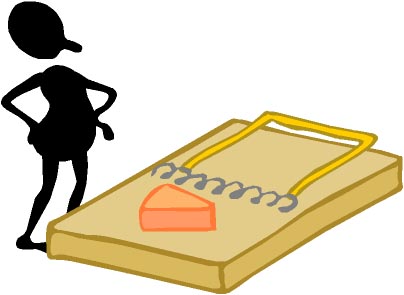
The cheese

sbMouseTrap.jpg


And the trap


___________​


Auditing is an English language word.

Amongst synonyms listed by Merriam-Webster are: "Examination, going-over, review, scan, scrutiny, view."

The Latin root word means, "a hearing," or "to hear."

Scientology has adopted the word, "auditing."

ron-operator-1980.jpg


Those introduced to auditing by Scientologists, both inside and outside the CofS, are often told the above definitions are descriptive of Scientology auditing.


_________________​


IMO, it's important to discern between the "bait" portion of auditing where one is primarily asked, and the "switch" portion of "auditing" where one is primarily told.


"This is a cold blooded and factual account of your last sixty trillion years," from 1952's 'What to Audit' (a.k.a. 'History of Man') found Hubbard telling others the contents of their minds, but it was premature "mind grope," just as the early 1950s e-meter reactions projected on the wall with shadows, while the audience went "ooh!" and "ahh!", was premature "Your e-meter will tell you"-ism, and the 1951 "no rights of any kind" was premature SP Doctrine, and the 1951 "dispose of quietly and without sorrow" was premature Fair Game Law and premature disconnection - disconnection in its most extreme form.

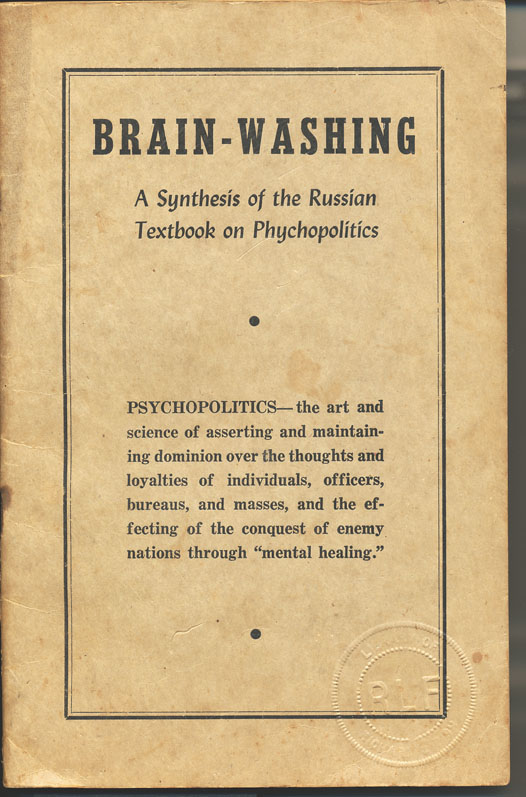
It was too early for the implementation of these ideas on the still small, fragile and tentative membership. That would need to wait for a decade, as would Hubbard's implementation of most of the ideas outlined in the "enigmatic" (fraudulent) "Russian Textbook on Psycho-politics."

1955-brainwashing-front2.jpg
http://exscn.net/content/view/178/105/index.html


In the mean time, Hubbard surrounded himself with those excited about his much advertised vision of a better world, and excited about the full releasing of spiritual ability.

Hubbard liked to write and he liked to lecture, and he had a knack as a practical psychologist. He drew on the ideas and innovations of the most creative of those around him, and drew on his own knowledge of abreaction (catharsis, "get it [buried thoughts and emotions] off your chest") therapy, of Alfred Korzybski's General Semantics, and of Aleister Crowley's Magic(k). Hubbard re-worked the (four 'letters' - ingredients - of the) Kabbalistic 'tetragrammaton', and it became his 'Four Conditions of Existence'. Hubbard rewrote Crowley's 'Naples Arrangement' and it became his 'The Factors'. He borrowed Crowley's idea of a multiplicity of infinite minds and further excited Scientologists with that notion. None of these were original with Crowley, who was as much a relay point as was Hubbard. Yet, unlike Crowley, Hubbard would eventually incorporate the methods of psychological warfare into his system, and use those methods, not only on his perceived enemies, but on his own followers.

And when he finally - in the mid 1960s - unleashed, mostly covertly, the psychological warfare methods of the "Russian Textbook" on Scientologists, he also returned to fully utilizing those ideas he had briefly tested more than a decade earlier. He gave Scientologists a past, he gave them a future, he told them the contents of their own minds, and made it plain that only HE knew and others were going to be told.

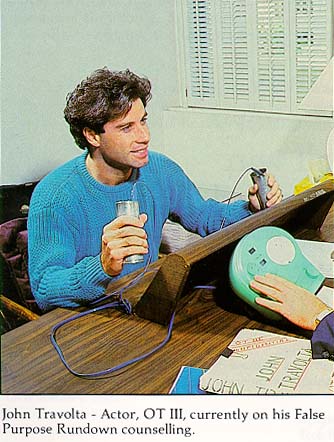
emetertravolta.jpg


Hubbard had written confidentially of the importance of "using enemy tactics," and would even use those "enemy tactics" on his own loyal followers. He had written of psychiatrists in August 1963:

"Psychiatry is authoritarian and tells the person what's wrong with him, often introducing a new lie. Scientology finds out what's wrong with the person from the person."

Soon to follow would be the secret and very serious, and very dangerous, and vital to your survival "Clearing Course," "OT 2" and "OT 3," in which Hubbard would do what he said the psychiatrists did.

Dianetics.jpg


Hubbard had done this in 1952, but now it was formalized and institutionalized, and a senior part of the doctrine of Scientology doctrine.


From Hubbard, 1966:

"Many persons experience unreality at the start of[implant] GPM running [told to you, not asked, by Hubbard through the materials]; this leaves when you see the meter reads."


L. Ron Hubbard, from 1946, from his (private) ''Affirmations':

"Your writing has a deep hypnotic effect on people and they are always pleased with what you write.

"Your psychology is advanced and true and wonderful. It hypnotizes people. It predicts their emotions, for you are their ruler."


Despite all this, is there some value in the simplest application of the definition of auditing? - a definition that predates Scientology.

IMO, yes. However, as such, it is no longer Scientology.


Asking a person, "How ya doing?" and listening attentively, and acknowledging, qualifies as "auditing" by an introductory definition of "auditing," as does asking a person to recall a pleasant experience, listening, and then acknowledging.

Such introductory actions, presented as "auditing" are often what leads a person into Scientology, and causes the person to pursue the Scientology "bait and switch" Grade Chart.

Scientology/Scientology Philosophy/Scientology Doctrine, is sneaky. It wraps itself in positives so as to mislead the unsuspecting.

Not recognizing this mostly benign introductory aspect means not recognizing the "cheese" part of the trap, and means also not recognizing a main part of Scientology's disguise layer.

Thoroughly describing Scientology is the most dangerous thing that can be done to Scientology.

Scientology uses good people, and uses - sometimes - good ideas, to mislead, to build confidence, and to trap.

A description without noting the above is incomplete, IMO.


The definition of auditing changes as the person descends further into Scientology. At first, auditing is little more than one person talking with another person. At this stage, in and of itself, auditing is, essentially, benign. It may even be beneficial.

This "sells" the person on the idea of "auditing."

Then it becomes something else.


"Auditing" has multiple meanings that, in accordance with Scientology's "gradients of deception" and "bait and switch" pattern, mislead a person onto the Scientology Grade Chart, a Chart that begins with mostly benign actions, and eventually becomes manipulative, "hypnotic," and potentially psychologically damaging.

That's why issuing forth a Bronx cheer,
Bronx-Cheer.jpg
indiscriminately, on the topic of auditing is helpful to Scientology. Such a Bronx cheer asserts that one of Scientology's - initially benign, and even helpful - enticements, and lead-ins, is entirely without value, which is sometimes simply not so.

Describing Scientology fully means recognizing that there are some twinkling ornaments of light, and (even) truth, wrapped around the black hole of Scientology doctrine.


Hope this helps. :)

another correspondence i've never seen mentioned is that ron's three energy forms; flow, ridge and dispersal match the three energies of astrology; cardinal, mutable and fixed. the same triad is probably found in other systems...
 

Terril park

Sponsor
If your main point is that Scientologists are too committed to their enterprise to be critical, then that's an important point. All I'm saying is that peer review, as such, does not necessarily prevent that, in any case. Whether peer reviewers are sufficiently critical is a serious issue in real science. Every few years or so some new topic emerges and becomes hot. Lots of papers get published about it. Is that because it's a real breakthrough that has legs to run for years? Or is just that everybody who is 'in the game' is giving everyone else in it an easy ride, when it comes to peer review?

People in neighboring fields look sideways at the hot topic. Are they just jealous? Are they ignorant? Or are they blowing the whistle on a scientific scam? Do journal editors start consulting a few people from somewhat more distant fields, to do peer review on papers on the hot topic? Do they listen to those possibly hostile reviewers?

It's not a matter of real dishonesty, but just of people who are closely involved in a subject being committed to it — and conversely, of people not so invested in the field being hostile to its proliferation. Peer review has this problem, and it's a real and important one. Over ten years or so, things tend to settle down. Bubbles burst, solid stuff survives. But that can still take long enough that in the meantime people win grants or tenured positions through hype — or lose them through hostility.

In spite of all those weaknesses, peer review has some killer advantages over other systems of quality control (including having no control at all). The essential point of peer review is that it's a free market approach to quality assurance: a field sets its own standards, instead of being obliged to hew to a line fixed in advance by someone else. This has some real weaknesses, but it has all the advantages of free markets over planned economies.

If Scientology hasn't really achieved peer review, then I still don't see why it couldn't. As far as that goes, it would be a good thing. It would not ensure that Scientology were actually sound or useful, because peer review alone cannot do that, anyway. It would amount to having Scientology at least get its own house in order, enough to be presentable for outside inspection. Maybe then real scientists might get interested, if Scientology settled down into something rigorous by its own internal standards, and stopped being such a randomly moving target of ambiguous claims and anecdotal evidence.

Thanks Mick and SOT for an illuminating discussion shedding light on
areas I'm not expert at all.

There are now many well trained scientologists who put out new scenarios
of what the subject should or might be. Below one that I consider important as its one of the last persons trained under LRH, on the first NOTs course one of the first flag case cracking case supervisors, and class XII.

He has posited the radical idea of training via skype. Seems workable to me.

My limited knowledge re mainstream therapy is that there are very many and no consensus as to which are best.

In my 13 years in the FZ the usual " peer review" is how standard one is re KSW etc. I have no problem with people wishing to be standard and usually
they get good results. A few claiming to be standard fuck up their clients.
Some also make unjustified attacks on other FZers

COS has never released its data base on its results really.

I've been posting success stories from the FZ for 13 years and most
are recorded on the net. With no editing by me apart from a couple or so.

There have been very few stories of loss re the FZ.

The most damaging was highlighted by myself.

=======================
DOC
On-Line Org F2.doc
181KB
Save
Hi
In today's technology it is possible to train online.

I am offering selected individuals to train to XII.

See flier.

My purpose is to train other to safeguard and help others routinely resolve cases.

--
Glenn
 
Thanks Mick and SOT for an illuminating discussion shedding light on
areas I'm not expert at all.

There are now many well trained scientologists who put out new scenarios
of what the subject should or might be. Below one that I consider important as its one of the last persons trained under LRH, on the first NOTs course one of the first flag case cracking case supervisors, and class XII.

He has posited the radical idea of training via skype. Seems workable to me.

My limited knowledge re mainstream therapy is that there are very many and no consensus as to which are best.

In my 13 years in the FZ the usual " peer review" is how standard one is re KSW etc. I have no problem with people wishing to be standard and usually
they get good results. A few claiming to be standard fuck up their clients.
Some also make unjustified attacks on other FZers

COS has never released its data base on its results really.

I've been posting success stories from the FZ for 13 years and most
are recorded on the net. With no editing by me apart from a couple or so.

There have been very few stories of loss re the FZ.

The most damaging was highlighted by myself.

=======================
DOC
On-Line Org F2.doc
181KB
Save
Hi
In today's technology it is possible to train online.

I am offering selected individuals to train to XII.

See flier.

My purpose is to train other to safeguard and help others routinely resolve cases.

--
Glenn

BLEAAHHH!!!

yeah, yeah, yeah...

you can train an auditor online...

gimme that oldfashioned pre-superlit auditor training. a bunch of live people up close and personal giving each other starrate checkouts

and i read something once where ron wrote something of his vision of an academy and it sounded very lively. the "no verbal tech" dictum was enforced far too tightly. auditors should share a passion for thir calling and make something of a salon of the academy and hgc and qual. the veriest truth of auditing is not that it's a technology but that it's an art founded on a technology...

it ain't auto mechanics f'crissakes
 

Terril park

Sponsor
BLEAAHHH!!!

yeah, yeah, yeah...

you can train an auditor online...

gimme that oldfashioned pre-superlit auditor training. a bunch of live people up close and personal giving each other starrate checkouts

and i read something once where ron wrote something of his vision of an academy and it sounded very lively. the "no verbal tech" dictum was enforced far too tightly. auditors should share a passion for thir calling and make something of a salon of the academy and hgc and qual. the veriest truth of auditing is not that it's a technology but that it's an art founded on a technology...

it ain't auto mechanics f'crissakes

Any problems with star rate [ weird name?] checkouts via skype. Or for that matter clay demo's?
 
Top