What's new

The Little Thread Which Grew - the Apollo '73 to Everything But

Status
Not open for further replies.
Re: The old days - Aboard the Apollo - 1973

Yes, Winston, I did study violin for a few years.

In 1957 I was written up as "The Bohemian Surfer" in the Sydney Daily Telegraph ( a second string rag, last heard out of business). Such was their astonishment that a sportsman would also be into something like playing the violin!!! :melodramatic:

Anyhow, several things coalesced to conspire to having me put the fiddle aside, sadly to never return.

I developed rather large, well muscled shoulders (made it uncomfortable to contort around the instrument) . . . see my period pic in my profile album of me at the time as an athlete, and spending many hours a day in the water meant my finger tips didn't develop the callouses and toughness for fingering the strings.

Loving the music though I did, what it took to play it was more than I was at that time willing to devote to it as I was intent on being a champion athlete . . . also $cn began to eat up my $$$s and time.

I always thought I'd get back to it. That's why I haunted the violin shops in London, and Basel . . . . but it has not been so.

None the less, the love of the stringed instruments is still there.

I went to a live concert recently of of a string quintet. An intimate affair in the local Seventh Day Adventist Church.

One of the cellos seemed to me to have a very unusual configuration. It was way differently proportioned to the other cellos in the group.

It fascinated me. I went up to the player after the concert to discuss his instrument. It turned out it was a replica of a Strad

Wow! fascinating to chat about and get the nuances of proportions and comportment of this cello as compared to the other instruments.

I just find it fascinating . . . . Virginia was amazed I spotted the difference from the audience.:wink2:

Though I'm happy with my life and what I've been, done, had . . . not still playing the violin is one of my less than ideal scenarios.

Actually, a more favorite instrument to me is the viola . . . I just love its tonal qualities. Great shame a lot more solo piece have not been written for it. I place the cello as joint second favorite with the violin.

I read recently that some musical wonks, having research the tonal ranges of the stringed instruments, actually expanded the number of instruments . . . I think, from memory it's either 5 or 6.

These folks then commissioned the making of the extra instruments (one is set between the viola and the cello). These instruments are in a museum in New Jersey. They have been very recently used in a concert.

It will be interesting to see what becomes of this development . . . maybe there is a huge opportunity here for some folks to do some special arrangements for such an array of instruments . . . .

Rog

Wow. There is enough material in this discussion to have me go on for hours. When I began cello I was also athletic and it became obvious it would have to be weight lifting or cello, not both. I chose cello. Strad's cellos are generally very large; in fact the instrument Janos Starker played for most of his life was so big that he had to adjust how he approached the instrument. No one else could play it. All his recordings are with the "Lord Aylesford" cello, a very deep rich mellow sound. Tragically, he did not own the instrument and sometime around the early 70s the owner offered to sell it to him but he could not afford the price, even though he was a world famous soloist and teacher at Indiana U. So the owner did the unthinkable. They took the cello back and some jackass violinmaker cut it down! No longer the "Lord Aylesford." I am sure it is still a good cello, but a crime has been commited against the world with that one.

I went to the "First World Cello Congress" at the U of Maryland in 1988, and there were dozens of the greatest cellists on earth there. In the exhibits, they had a collection of instruments that were odd sizes and tunings. This is probably what you are thinking about Roger. I did not hear any of them, but they were for sale.

People have always told me they wished they played cello instead of violin or viola. I find that a riot, because I was always inspired by great violinists. David Oistrakh was my idol. It think his dates were 1908-1974. He died on the podium in a rehearal in Amsterdam. Oistrakh to this day is the sound violinists revere, indeed everyone reveres.

Anyhoo, thanks for jogging my old brain. I may yet start telling funny stories of orchestral playing.
 
Re: The old days - Aboard the Apollo - 1973

Okay, a couple of quotes from conductors:

"I'm conducting slowly because I don't know the tempo."

"I was trying to help you, so I was beating wrong."

"It is not as difficult as I thought it was, but it is harder than it is."

"Something went wrong. It was correct when I studied it."

Once I had a conductor tell the cello section to play softer (we are forever being told that.) So we did, but he still said it was too loud. The next time through, we did not play at all. He said, "It's still too loud."

During Reagan admin, Marvin Hamlisch conducted us so much he called us "his orchestra." He had an annoying habit of saying "from the tippy tippy top" when he wanted to start at the beginning. We were recording something and it was getting tense. He finally said, "From the beginning." Our bass player, a very funny guy, immediately said "You mean from the tippy tippy top?" Hamlisch did not appreciate that but we were bowled over in laughter.

Years later, the marine band pianist was asked to come to Los Angeles for a recording session. When he got there, the concertmaster, a gruff old man was complaining about intonation and all sorts of stuff. When the pianist was introduced as being from the Marine Band, the concertmaster asks him if he knew D.W., the bassist. (mentioned above) He said, why yes, I know him. Ray Kobler, the concertmaster, then said "Funniest man I ever knew." From then on our pianist could do no wrong. Note: I was in an orchestra waaay back in the late 60s that accompanied Ray in the Tchaikovsky concerto. Kobler was in the Marine Band at the time.

More later if my brain can remember.
 
Re: The old days - Aboard the Apollo - 1973

Ahh, Winnie,

Cello was not at all a "fashionable" instrument when I was growing up in Oz :bigcry: It was all violin . . . the first solo cello piece I heard was in England and then fell in love with it.

I did live concerts with Jacqueline Du Pre and that switched me onto the great Pablo Casals . . . . and now I was hearing magical music!

Oistrakh I heard live in Sydney (if my memory serves correctly).

I met Yehudi Menuhin at the International Vegetarian Convention in 1965. (I was the Oz Delegate.) The sound of his playing always seemed somewhat "hard and brittle" to me . . . maybe because his fingering was a little too tight and it choked the string . . . . We conversed. A charming man, if somewhat "intense."

I wonder if you musical types are familiar with one of my favorite Public Television pieces . . . The Art of the Violin.
This two-hour program covers the world's most celebrated 20th-century violinists, including Jascha Heifetz, Fritz Kreisler, David Oïstrakh, Yehudi Menuhin, Isaac Stern, Eugène Ysaÿe, and many others.
Here: http://www.pbs.org/wnet/gperf/shows/artofviolin/artofviolin.html

There are some revelations in it. One was the bowing of Nathan Milstein . . . what a master!

For you guys who like to understand how the sounds and the music is made, this is a revelation of a program. :yes:

So it seems, Winnie, growing up in the then backwoods of Oz as I did, deprived me of an instrument I could have been comfortable with and gotten my bulky shoulders around:melodramatic::biggrin:

Rog
 
Last edited:
Re: The old days - Aboard the Apollo - 1973

Awesome stories and anecdotes, Roger, Winston, Face, Terril and others. I am just blown away that this topic is taking root. Please continue with more anecdotes!!:happydance:
Lakey
 
Re: The old days - Aboard the Apollo - 1973

Sorry, you music lovers: I'm out of recollections :bigcry:

But since we have some surfer-girls on our thread, I've had my attention on these photos sent to me by one of my Ozzie chums I grew up with. These shots are of the surf at the beach I grew up on . . . Bronte Beach, Sydney.

These shots are this winter. What we get in the winter in Sydney is westerly winds off of the continent that blows across the ocean and smooths it . . . it also blows spray back off of the wave, as you can see.

Add southern winter storms to give us wonderful swells up from the south . . . and it's a surfer's paradise . . . if you've got the stomach for it :biggrin: These are BIG waves! :yes:

This first shot was taken early on in the "storm" . . . it quietened down after seven days of glorious action :happydance:

Obviously, many of these shots are taken with telephoto lenses, so there appears to be some distortion regards distance perspective.

11071301005.jpg

11071301006.jpg


This shot below is taken at the swim pool I spent years training many miles in. The lads are waiting for a break so they can get in at it!
It's just to the upper left of this photo out where the white water is surging over a reef below the surface that I did the "lose the body" trick in '63.
11071301007.jpg

11071301002.jpg


11071101005.jpg


Now is it any wonder I chose this instead of violin?? :duh:
 
Last edited:
Re: The old days - Aboard the Apollo - 1973

Originally posted by Roger B

Now is it any wonder I chose this instead of violin??

And I thought the study of playing musical notes was complicated.

http://www.surfline.com/surfology/gloss_definitions.cfm#

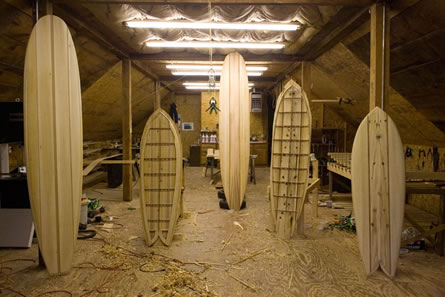
http://www.gussetviolins.com/wood.htm

http://woodensurfboards.blogspot.com/

Maybe both extreme joys started with great appreciation for a real nice piece of wood!

workshop_boards.jpg


http://olosurfer-woodensurfboardsat...aron-12-foot-wooden-surfboard-project_28.html
ZZ-Baron-wooden-surfboard-laminating6.jpg


ar129039977033073.jpg
 
Last edited:
Re: The old days - Aboard the Apollo - 1973

Opera requires, I think, much more work - first of all there is actually understanding what it is they are singing - a casual listener will have a very hard time even hearing the words that a soprano is enunciating.

IMHO (and its not often I say that) the best way to get the most out of opera is to get tickets to a big production produced by some of the greater opera companies. Book it well in advance.

Buy a good CD of the opera that also has the score and preferably a translation too.

Follow the CD with the score and the translation so you know what is going on and can start to discern if the singers are actually getting it right in terms of the emotions.

Then go see it. If you pick a great opera the result can pay off so well, you would be surprised.

No doubt excellent advice.

I sort of like Fidelio.

Not able to dig opera. Well getting on with Wagner.

So once again I post the vocal and intensely spiritual Indian
classical singers.

This Mick the Merciless? Lol

Just getting started. Subbilakshmi who sang at the
united nations concert at Carnegie hall.


http://www.youtube.com/watch?v=03v9f7JUWhk
 
Re: The old days - Aboard the Apollo - 1973

Hey I am not saying I am an opera fan. In fact I used to have a bumper sticker that said "Help Stamp Out Opera." But Mozart wrote several first rate operas, and that cannot be ignored.

For you trivia nuts, the Metropolitan Opera Orchestra is the highest paid orchestra in the WORLD. I think for good reason, because opera is extremely taxing for players; you have to watch the conductor like a hawk, be aware of what is onstage and play sometimes unplayable music. That said, I loved playing "Gianni Schicci,"* "Suor Angelica", Don Giovanni, Magic Fruit, La Traviatta, and Madame Butterfat. I think there was one other also but I fergit it now.

*think Barilla pasta sauce
 
Re: The old days - Aboard the Apollo - 1973

Hey I am not saying I am an opera fan. In fact I used to have a bumper sticker that said "Help Stamp Out Opera." But Mozart wrote several first rate operas, and that cannot be ignored.

For you trivia nuts, the Metropolitan Opera Orchestra is the highest paid orchestra in the WORLD. I think for good reason, because opera is extremely taxing for players; you have to watch the conductor like a hawk, be aware of what is onstage and play sometimes unplayable music. That said, I loved playing "Gianni Schicci,"* "Suor Angelica", Don Giovanni, Magic Fruit, La Traviatta, and Madame Butterfat. I think there was one other also but I fergit it now.

*think Barilla pasta sauce

I started out detesting opera as a teenager around 15 years old. One of my friend's dad grew up in Germany and came to the US in the late 30's. He listened to the New York Metropolitan Opera's radio broadcast every Sunday. Several times in the mid 50's, my friend and I tried to play checkers, chess or card games and the opera was on and we could not stand it and had to leave the house!

The first breakthrough for me came around age 18. I saw the Bugs Bunny version of Rossini's "Barber of Seville" and liked it a lot. Also I loved the Lone Ranger theme song, Rossini's William Tell Overture. I rented the "Barber of Seville" from the library and began to learn the story and the tunes and started to like it.

My second step occurred because I liked Mozart so much. I decided to purchase one of his operas which was "The Marriage of Figaro" From the Overture and the first aria I just loved it right from the start.

That's the way it was for decades. The only operas I liked were Mozart's and Rossini's. Then, about 20 years ago, we started my daughter on piano lessons at age 4, she took lessons for 14 years and attended Orange Country High School of the arts, majoring in Music and specializing in piano.

My daughter also started taking voice and suddenly we were buying opera tickets and attending major productions in L.A. and Orange Country.

THE OPERA "CARMEN" BY BIZET IS A GOOD ONE TO START WITH
Nearly everyone knows the tunes from Bizet's "Carmen" and the story is quite easy to follow and also quite engaging. That is a good starter opera for those who don't like opera but want to give it a try.

With my daughter we attended many opera's. I came to like Puccini, Verdi, Donizetti. Bizet, Wagner and several others. Puccini's "La Boehme" is a particularly great opera with an engaging and sad story line and some hauntingly beautiful arias.

That is about as far as I go, just Mozart from the 18th century and the rest of the operas which I have grown to love are from the 19th century and the early 20th century. I am by no means an afficianado of opera, but if any of those composers which I named above have operas going on in my area, I will be there with bells on to hear them.

By the way, there were several other good opera composers from the 18th century other than Mozart. My two favorites are Giovanni Paisielo and Vicente Martin y Soler, a Spaniard who came to Vienna in the 1780's and composed for Emperor Joseph. Also, Salieri, the protagonist in the movie, "Amadeus" was also quite talented.

WHO WRITES THE STORIES AND THE LYRICS? - THE LIBRETTIST
My favoite Librettist is a man named Lorenzo da Ponte. An Italian born Jew, his mother died young and his Father married a Catholic woman. Lorenzo's name changed from Emmanuel Conigliero to Lorenzo da Ponte.

This man led an amazing life. Born in 1751, he wrote opera texts for Mozart, Martin y Soler, Salieri and Sarti. He moved to England around 1794 and put on a big subscription series of operas in London. He got Martin y Soler to join him in London. Da Ponte supplied the texts and Martin y Soler supplied the music for a successful and very profitable series given in London.

In the mid 1790's Da Ponte married a Jewish woman and they immigrated to the United States around 1801. He lived in Pennsylvania but eventually migrated to New York City. In a chance meeting in a bookstore in New York, he met a young woman whose father was a top official at Columbia University. She introduced Lorenzo to her father and Lorenzo was appointed the first Professor of Italian Literature at Columbia. Lorenzo lived a very long and full life in New York City and led the move to build New York's first opera house. He lived all the way up until 1839, dying in New York City, at age 88, as a United States Citizen. What a long and celebrated life he had!!
Lakey
 
Last edited:
Re: The old days - Aboard the Apollo - 1973


Fascinating video Hats!!! What a tour de force. Its good to see Lorenzo da Ponte get such recognition! His memoirs, written in book form in the 1830's are for sale on the internet, I bought a copy a few years ago. Not many people outside of the opera world know his name but the man knew how to live and make his life count.

Despite the bloody and tormented history of planet Earth, a few very great men lived and created masterpieces which have brought joy and aesthetic pleasure to mankind for centuries.

OPERA Opera is a very aesthetic form of art because it COMBINES the beauty of music with the art of story telling and the writing of lyrics which are poetic and are fine art in their own right.

Then you add set design, costume design and the individual nuances of the singers and you have the potential there to experience a piece of "heaven" just by watching a DVD, or better yet, going to a live performance.

THE SINGERS All the great opera composer coddled their singers. You know, the term "prima donna" has come down through time meaning a female who is very demanding, thinks she is really hot stuff and will explode with fury if she does not get her way. And so it is and so it was.

Great vocal artists have always determined how well a particular performance comes off and there is a lot of room for the directors of the production to introduce little twists, in the form of mannerisms, nuances or stage props which can greatly add to the performance.
Lakey
 
Re: The old days - Aboard the Apollo - 1973

The movie Mozart's Sister - I saw it yesterday.

I saw this movie yesterday. I rate it a "B" just like the newspaper critic. The parts that are really well done are the sets and costumes, wigs, horse driven coaches, etc. Also, when the two Mozart children are playing for the French royalty, the scenes are extremely engaging. The time period was mainly 1767 when Wolfgang was 11 and Nanerl was nearly 16.

Besides the music and costumes, there was an informative portrayal of the French nobility. King Louie the XVth I believe, wanted a male heir. He had something like 7 daughters and all were sent away to be raised in an abbey, some distance from the King and the Queen. The girls never saw there Mother and Father as they were growing up. The male heir, Louie XVI did have limited contact with his sisters. Talk about sexist and sexism, this was it to the nth degree! \

Not to be outdone, the non nobility, exemplified by Leopold Mozart and his obedient wife, Maria Anna practice extreme sexism against their daughter Nannerl.

TRUTH VS FICTION - Truth - there is no doubt whatsoever that Nannerl was a gifted performer. She played the keyboard instruments of the day, harpsichord, clavicord and early versions of the piano as well as her Brother. She also was an exquisite singer and a very fine violin player.

Whether she had a knack for composition or not, I do not believe that anyone knows. It was never mentioned in the family letters which have survived and not compositions by her were saved. The movie makes a case that she was a brilliant composer. In the movie she states that in Wolfgang's early notebook from when he was 5 years old, she was the one who penned several of his little sonata pieces.

Also, in one scene in the movie, a rhythmic tune comes into her head while talking to her brother. She tells him it just formed there without any conscious effort on her part and she starts swaying with the beat. The two of them quickly run over to the piano and start playing it as a composition for 4 hands. It is really a great piece, if someone wrote it for the movie, it is probably the best 18th century music ever penned since the 18th century!

Later on Nannerl has occasion to write a religious piece with quartet and voice for Louie XVI. It is hauntingly beautiful. Nannerl's compositions are made totally different sounding than Wolfgang's but at the same high level of quality and beauty.

At she approached 16, Leopold deemed it not proper for his daughter to play the violin or compose. He insisted that she get married and give him grandchildren.

Nanerl takes on her Father, Leopold and pleads with him to be allowed to attend the music compostion lessons which he gives to Wolfgang. Leopold denies her.

Some occurances take place which break her youthful spirit and finally, she throws all her compostions into the fire, never to be heard again.

She becomes a dutiful daughter, never again challenging her Father and living her life only to serve him and give him pride and granchildren. She lives to the ripe old age of 78, dying in Salzburg in 1830, outliving her younger brother by 39 years. Probably she was a gifted composer in her own right but no one will ever know what might have been.

Talk about outliving someone, Mozart's wife Stanzi, lived all the way to 1842 while her husband died in 1791, 51 years earlier. Of course she did remarry. She lived into the age of photograpy and one photgraph taken in Austria in 1840 is supposed to contain Stanzi in the group of people photographed:

Constance Mozart (nee Weber) in the 1780's when married to Wolfgang:

Constance.gif

Purported to be Constance Mozart circa 1840 - The text says 1st row on left but she was 80 years old so it looks more like the first row on right.

Constanze_Weber_1840_full.jpg


Lakey
 
Last edited:
Status
Not open for further replies.
Top